PhishNet collects fraud and threat signals, links them to brands and customers, preserves the source trail, and exports the proof your board, auditor, insurer or regulator can use. With qualified RFC 3161 timestamps, selected evidence can support court-grade EU workflows for prosecutions, insurance claims and TLPT evidence.
Every finding keeps its source trail, confidence, timestamp, review state and evidence links, so the number on a dashboard can always open the rows behind it.
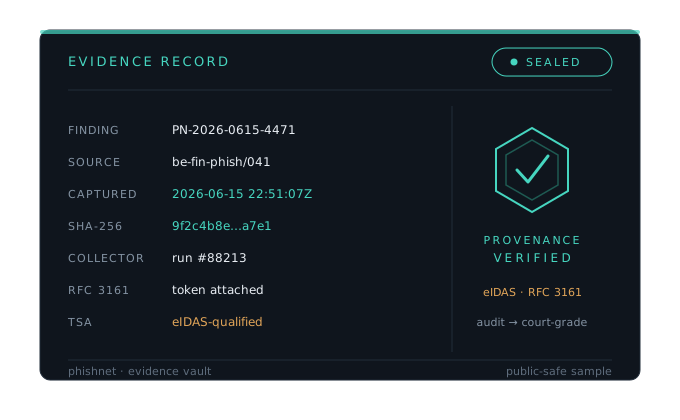
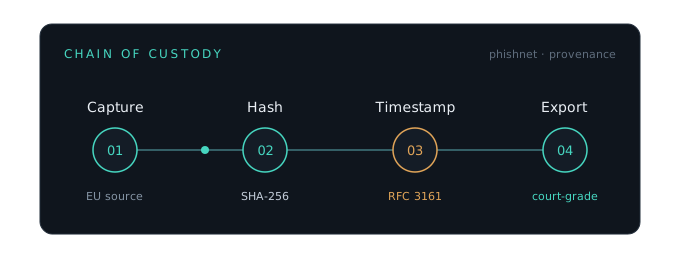
Every finding retains its source, SHA-256 hash, collector run and timestamp trail. Where a qualified RFC 3161 token is attached, the vault preserves eIDAS-qualified proof that can move from audit-grade to court-grade under EU law.
Search across phishing journeys, impersonation infrastructure, kits, ransomware claims, exposure signals and evidence artifacts without losing the proof trail.
Phishing, smishing, ransomware, credential exposure, public attack surface, sanctions exposure, OT advisories and monitored public channels.
Turn findings into partner-safe indicators, regulator packets, board summaries or prosecution-ready evidence packs.
Every major counter and report claim should open the supporting rows, source policy, confidence, graph context and evidence record. That is the difference between a feed and a defensible file.
The same evidence supports fraud response, NIS2 files, DORA reporting, insurer discussions, takedown work and executive briefings.
Interrogate the corpus and keep attribution-grade provenance entirely inside EU jurisdiction.
Build DORA evidence, fraud case files and claims packets that survive audit, insurer scrutiny and evidentiary challenge.
Run your own analysis over a feed you do not have to collect yourself, while keeping the export contract intact.
Book a tour and we will walk a finding from collector capture through the evidence vault to a citable export, including where qualified timestamp proof strengthens the final package.