Operational change brief
New phishing assets, exposed infrastructure, active kits, takedown movement, KEV/CVE pressure and priority actions for fraud, SOC and brand-protection teams.
View weekly samplePhishNet converts phishing, impersonation, ransomware, supplier and exposure data into customer-ready report packs for NIS2 responsibilities, board accountability and attack-surface management.
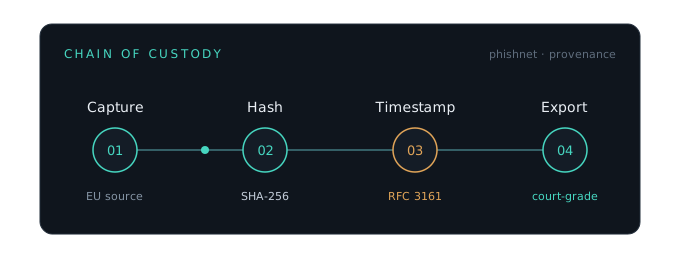
Every report answers the questions regulated teams are actually asked: what changed, who is affected, how do we know, what action is open, and what can we show a board, auditor, insurer or regulator.
That sentence matters. The report pack gives leadership a repeatable record that monitoring existed before an incident, not after someone asked for proof.
Security teams need fresh actions. Risk committees need trend and ownership. Boards need exposure, euros-at-risk framing and confidence that the organisation can prove its work.
New phishing assets, exposed infrastructure, active kits, takedown movement, KEV/CVE pressure and priority actions for fraud, SOC and brand-protection teams.
View weekly sampleAttack-surface movement, customer-harm trends, supplier exposure, campaign shifts, unresolved actions and evidence-backed progress against the previous month.
View monthly sampleSector pressure, peer benchmark versus comparable Belgian institutions, trend arrows, board risk letter and regulator-safe evidence appendix.
View quarterly sampleYear-over-year exposure, recurring actor and kit patterns, control maturity, reporting readiness, open risk and the management record for audits and renewals.
View annual samplePhishNet helps customers document threat-landscape monitoring, incident context, risk-management evidence, supplier and attack-surface exposure, board communication and follow-up actions.
Not every regulated customer looks like a bank. Towns, utilities, healthcare networks, transport operators and field-service groups need clear evidence for citizen-facing services, suppliers, portals, apps, payments and local infrastructure.
Use PhishNet to approach municipalities, intermunicipal organisations, sector associations, MSSPs and regulated service providers with a concrete file: what is exposed, what changed this week, how it was proven, what action is next and what management can safely circulate.
Use for hospital networks, patient portals, eHealth journeys and NIS2 evidence conversations.
Open PDF Municipal report example Brief for towns, cities and citizen servicesUse as the first-call proof piece for municipalities and public-sector service owners.
Open PDF Fleet report example Exposure sheet for distributed operationsUse for mobility, logistics, utilities, field teams, payment journeys and partner infrastructure.
Open PDFThe PDFs are formatted for decision makers. The HTML previews are useful for review, accessibility checks and faster circulation before generating customer-specific packs.
A customer-facing brief for a named brand: exposure, peer comparison, operator pattern, evidence chain and recommended action.
The same flagship structure as a web-readable sample for review and iteration before customer delivery.
Short, action-oriented reporting for teams that need to move quickly without waiting for the quarterly cycle.
A management layer for trend, owner, unresolved action and attack-surface evolution.
The board-readable synthesis with peer benchmark, trend arrow, evidence readiness and NIS2/DORA reuse.
The annual record for audit, renewal, risk committee review and continuous-improvement planning.
A NIS2-oriented exposure brief for hospitals, patient portals, eHealth identity journeys and healthcare networks.
The hospital sample as a web-readable preview for review, outreach and customer-specific pack iteration.
A NIS2-oriented exposure brief for towns, local governments, citizen portals and public-service suppliers.
A concise management sheet for fleet, logistics, mobility, utility and field-service attack-surface risk.
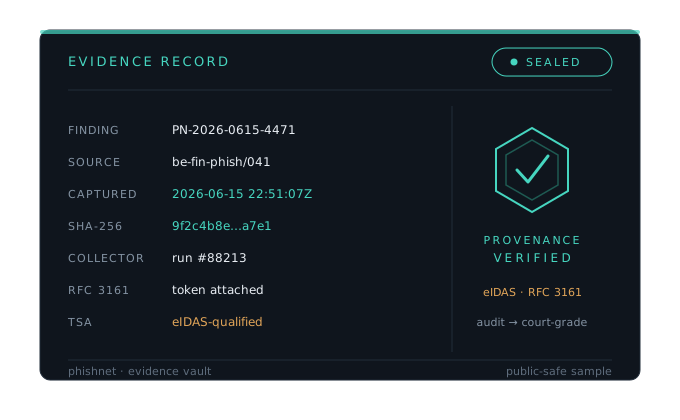
A report pack is generated for a customer, brand, sector or cohort. Raw sensitive material stays restricted; the customer view exposes defanged indicators, hashes, excerpts, provenance, confidence, timestamps, evidence links and recommended actions.